


An open foundation for modern grid planning
Introducing OpenGrid: modern grid planning, in every grid stakeholder’s hands
More than 2,500 gigawatts of energy, storage, and large-load projects are waiting in grid connection queues worldwide. Electricity demand continues to rise in emerging economies and is growing once again in advanced economies as electrification and artificial intelligence booms. To keep up with this growth while maintaining our aging infrastructure, annual grid investment needs to roughly double by 2030 to more than $600 billion USD. The decisions made this decade will shape energy outcomes for 30 to 60 years or more.
The challenge? Every one of these decisions depends on grid planning studies. To keep pace with the electricity system’s evolution, we need planning that is faster, reaches more people, and is designed for increased complexity.
Today, we’re launching OpenGrid to rise to that challenge.
Grid planning falls short in three ways:
- Speed. Plan-to-power timelines average 5 to 15 years. Globally, over 2 TW of generation and storage is stuck in interconnection queues, in part because every project must be studied, and studies still involve many manual steps and data translations.
- Reach. Roughly 90% of potential grid modelers don’t have access to commercial-grade modeling tools. An enterprise license costs about one modeler’s annual salary in the U.S., but roughly 10x that in India and 25x in Nigeria.
- Fidelity. Legacy tools were built for grids dominated by dispatchable thermal generation. They struggle to model variable resources, storage, and distributed energy, so grid planners default to what has worked in the past or must build custom in-house solutions. We need tools designed for the complexity of the modern grid that allow planners to reliably and economically compare emerging technologies alongside traditional solutions.
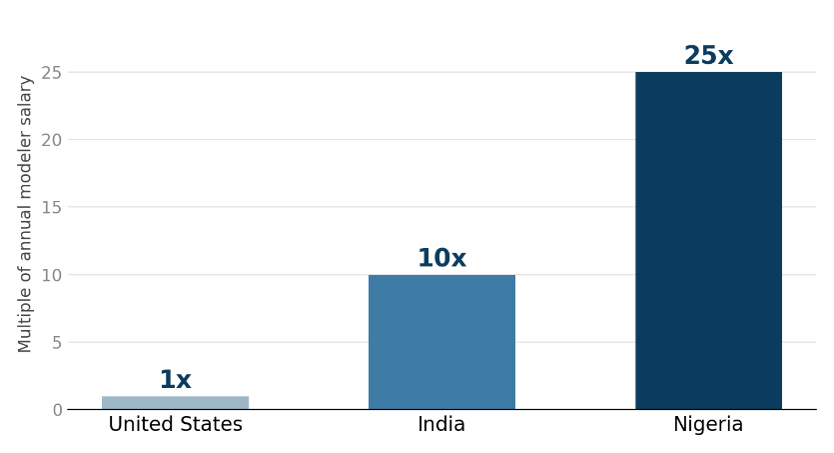
Enterprise energy-market simulation license cost as multiple of an average energy modeler’s annual salary. Source: OpenGrid Whitepaper (Oct 2026).
Underneath all three planning shortfalls is a data problem. Grid planners spend 60 to 80% of their time on data management and procurement: translating between proprietary formats, building one-off integrations, and hunting for the data they need (OpenGrid User Research, 2026). Utilities, governments, and vendors each build the same plumbing on their own. Meanwhile, powerful open-source tools like PyPSA, pandapower, PowSyBl, and OpenDSS already exist, and major institutions are exploring or adopting them. What’s missing are shared data, interoperability, and support to make these tools work together efficiently.
That’s why we’re launching OpenGrid: an open, vendor-neutral foundation that lets grid planning tools, data, and models work together instead of sitting in silos. It enhances the tools modelers already use rather than replacing them, and it is built on three elements:
- Platform: data access and modeling capabilities for all users
- Ecosystem: an open community that improves the product over time
- Governance: a home in the Linux Foundation, with a charter giving contributors, users, and funders a voice
We interviewed over 70 people across 46 organizations in 13 countries, from utilities and regulators to developers and large loads. Data was the clear top need, followed by trust and governance, then usability.
So, we’re starting with data. OpenGrid will begin with an open data hub to make finding, trusting, and preparing data for a grid model. Users and their AI agents will be able to pull the data they need into compatible modeling tools without time consuming and manual data prep. From there, the platform grows to include:
- Translator that moves models between tools, or carries results from one kind of study into the next
- Model plugins that connect the tools modelers already trust, open-source or commercial, to shared data, other models, and workflows
- Open-source compute and solvers that are fast and reliable enough for industry-grade planning models
- Workflow orchestration that lets anyone rerun a multi-step study, from raw data to final results, and get the same answer
- No-code GUI that puts serious planning analysis within reach of people who don’t write code
- Output visualization that lets a regulator, investor, or member of the public explore, compare, and understand results
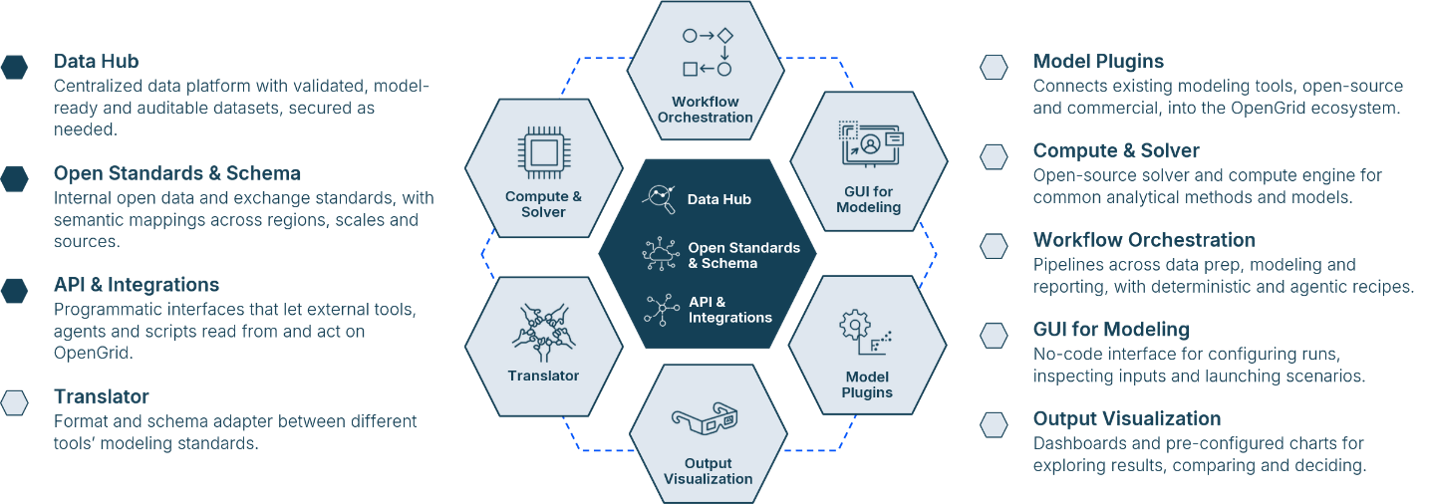
OpenGrid Platform Component Vision
By 2030, our goal is for open-source planning to be feasible anywhere, making grid planning a global public good. We plan to release the first foundational components in 2027. Governance details and contribution mechanisms will be published in Year 1, along with product briefs that community developers can pick up and build from.
OpenGrid is seeded with philanthropic capital and supported by Breakthrough Energy, the Connected Grid Initiative, Global Grids Catalyst, and Google.org, with technical partners including Open Energy Transition, TransitionZero, Tapestry, and QXT Energy.
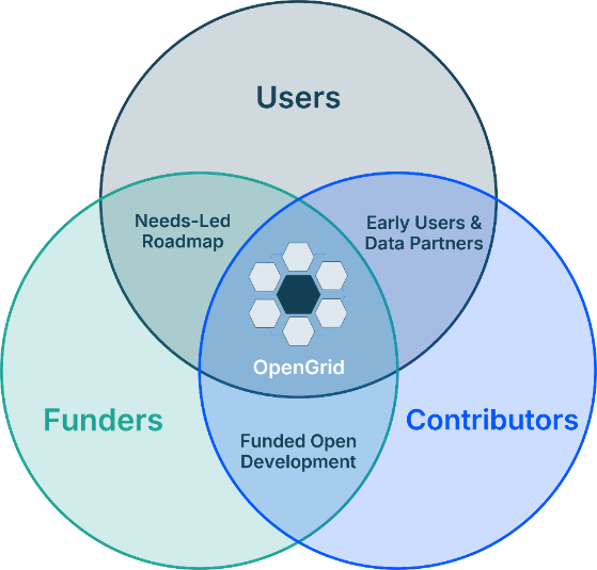
Get involved
- Planners and modelers: test it on your real workflows
- Developers and researchers: contribute data and code
- Regulators and advocates: help develop impactful new uses
- Funders and partners: back and help govern OpenGrid
Explore our website to sign up on Substack, join us on Zulip, follow GitHub for releases, and read the full whitepaper.
Plan the grid, together.

